

Most people don’t lack ability. They lack a system for getting started. Overcoming laziness is not about willpower alone. It is about removing the friction that stops you from beginning a task in the first place.
This guide covers six practical strategies for overcoming laziness. Each one is simple to apply today. None of them need special tools. None of them need a personality change either, just a small shift in how you approach your work.
You will also find a section on common mistakes, plus answers to the questions people ask most about this topic. Read through once, then pick one strategy to try this week. Small changes, done consistently, beat a big plan that never gets started.
What Is Laziness, Really?
Laziness looks like a lack of motivation, but it is often something else. Most of the time, it is a mix of unclear goals, fear of failure, and tasks that feel too big to start. Your brain avoids anything that feels overwhelming or pointless. So it stalls instead of acting.
This matters because it changes how you fix the problem. If laziness were just a character flaw, no strategy would help you. But laziness is usually a response to unclear tasks and missing structure. That means overcoming laziness becomes a practical problem you can solve, step by step. It is easy to get stuck in a lazy rut when your to-do list feels vague. The same happens when your goals have no real deadline attached to them.
Picture someone who keeps putting off their tax return. It is not that they cannot do maths, or that they enjoy the stress of a looming deadline. The task feels large, boring, and easy to delay by a day. Multiply that delay by a week, then a month, and the task grows heavier the longer it sits untouched.
Once you see laziness this way, the strategies below make more sense. They all work by making tasks clearer, smaller, or more rewarding. That is what actually gets people moving, far more than a pep talk or a burst of guilt ever could.
Why Overcoming Laziness Actually Matters
It is tempting to treat laziness as a minor issue, something to laugh off rather than fix. But left alone, it quietly costs you more than time. Missed deadlines pile up. Trust from colleagues or clients wears thin. Your own confidence takes a hit each time you plan to do something and then don’t.
There is also a compounding effect worth noticing. One delayed task rarely stays alone. It sits on your list, taking up mental space, while new tasks arrive on top of it. Before long, you are managing a backlog instead of a single job. Starting feels even harder than it did at the beginning.
The upside works the same way in reverse. Every small task you finish today makes tomorrow’s list shorter and lighter. That is the real reason overcoming laziness is worth the effort. It is not about being busy for its own sake. It is about keeping your workload from snowballing into something unmanageable.
Productivity Strategies for Overcoming Laziness
The six strategies below are not theories pulled from a textbook. They are habits used by people who once struggled with the same stuck feeling you might feel right now. Try them one at a time. Do not attempt all six in one week, so you can see which ones actually fit your routine.
Break Tasks Into Smaller Steps
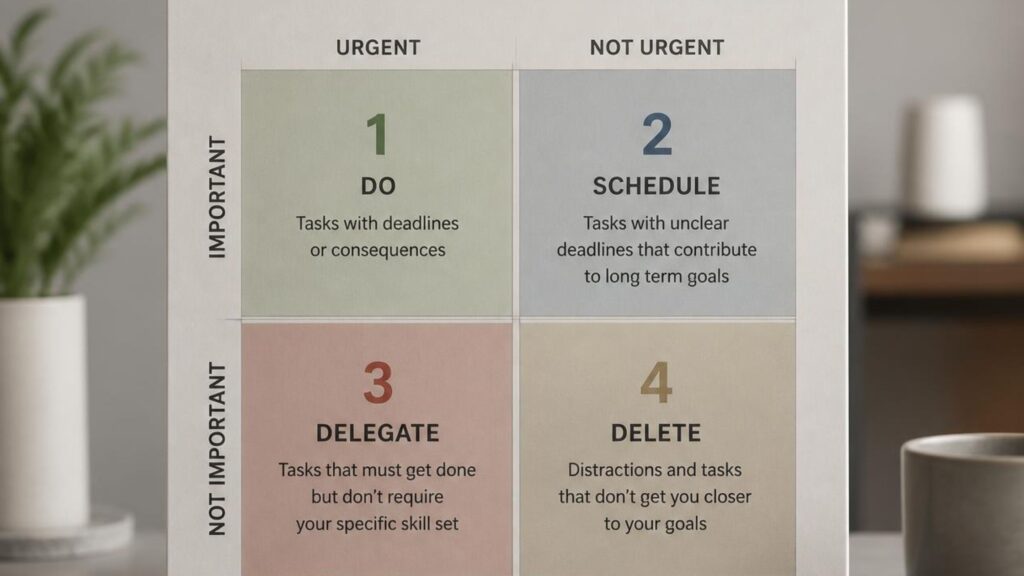
Big projects feel heavy because your brain sees the whole mountain at once. A report, a house move, or a business plan can all feel impossible before you even begin. The fix is simple: split the task into steps so small that each one takes only a few minutes to finish.
This works because small steps lower the mental cost of starting. Writing “write the report” on your list is vague and daunting. Writing “open a blank document and write one sentence” is not. Once you finish that tiny step, momentum carries you into the next one. The next task no longer feels like a mountain.
A good approach here is batching similar tasks together, rather than jumping between different types of work all day. Say you have five emails to send, five calls to make, and a report to write. Group the emails together. Group the calls together. Treat the report as its own separate block of time. This cuts down on the mental switching that drains your energy, and it makes starting each new task feel far less draining.
Try this today: pick one task you have been avoiding, and write down its smallest possible first step. Not the whole task, just the first two minutes of it. Do that one small step right now, before you read any further. You will likely find the rest of the task feels easier once you are already moving.
Set Specific Goals and Deadlines
A goal like “get fit” or “finish the project” gives your brain nothing to grab onto. Vague goals are one of the biggest reasons people struggle with overcoming laziness. There is no clear finish line. There is no clear moment to start either.
Specific goals work because they turn a vague feeling into a clear target. “Walk for twenty minutes at seven each morning” tells you exactly what to do and when to do it. Add a deadline, even a small one, and you create a sense of urgency that a vague goal never will. Deadlines force a decision: act now, or fall further behind.
Write your goals down somewhere you will actually see them, such as a notebook or a phone reminder. A goal that only lives in your head is easy to forget or quietly drop when the day gets busy. Once it is written down with a date attached, it becomes a real commitment rather than a passing wish.
Try breaking a single vague goal into three specific ones this week. Instead of “get organised,” try three smaller goals. Clear your inbox by Friday. File last month’s receipts by Wednesday. Book the dentist appointment by tomorrow. Each one has a clear action and a clear date. That makes each one far harder to quietly ignore.
Create a Rewards System
Your brain repeats behaviour that gets rewarded. If finishing a task brings nothing but relief, there is little pull to do it again tomorrow. A rewards system gives your brain a reason to look forward to the work itself, not just the moment it ends.
Keep the reward small and tied directly to the task you completed. Finish a work block, then make a coffee, take a short walk, or watch one episode of a show you enjoy. The size of the reward should match the size of the task, so save bigger treats for bigger wins. This stops the whole system from losing its effect through overuse.
Over time, this builds a simple loop: task, reward, repeat. That loop is far stronger than relying on motivation alone. Motivation comes and goes on its own schedule, but a reliable reward keeps showing up exactly when you need it. This is one of the simplest tools for overcoming laziness, because it costs no extra time, just a bit of planning ahead.
A practical example: if you dread doing the washing up, pair it with a podcast episode you actually enjoy. The task and the reward happen at the same time, so your brain starts to link the two together. After a few weeks, you may notice you no longer dread the task quite as much.
Find an Accountability Partner or Coach

Telling someone else about your goal changes how seriously you take it. An accountability partner, whether a friend, family member, or coach, gives you a person to answer to besides yourself. This alone makes overcoming laziness far easier, because skipping a task now means letting someone else down too, not just yourself.
This works because humans respond strongly to social pressure, even mild and friendly pressure. A quick check-in message asking “did you finish it?” can be enough. It pushes you through a task you would otherwise have delayed by another day. Choose someone who will actually follow up on you, not someone who forgets to ask after the first week.
If you don’t have someone nearby who fits this role, video content can help in a similar way. I share practical tips like these on my YouTube channel, where I break productivity habits down step by step. Watching someone else work through the same struggles can feel like a form of accountability too. It works even from a distance, without a direct check-in.
You can also build a lightweight version of this on your own. Post your goal somewhere public, such as a group chat or a social media caption. Even a small audience creates a mild sense of being watched. That alone often makes it harder to quietly skip the task you promised yourself you would do.
Focus on the Benefits and Consequences
Before starting a task, picture two outcomes clearly. First, picture how you will feel once it is done: relief, pride, or a simple sense of progress. Second, picture what happens if you keep putting it off: a bigger backlog, more stress, and less free time later on.
This works because it makes the cost of laziness visible rather than abstract. It is easy to delay a task when the downside feels distant and vague. But spell out the consequence clearly, such as a missed deadline or a client losing trust in you. The discomfort of starting now suddenly feels far smaller by comparison.
Try writing both outcomes down before a task you keep avoiding. Seeing them side by side, in plain words on paper, makes the choice obvious almost every time. This small pause is often enough to tip you from avoiding the task to actually starting it.
Consider a student putting off exam revision. The short-term comfort of watching another video feels good in the moment. But picture the stress of cramming the night before. Compare that to the calm of being prepared early. The right choice usually becomes far clearer.
Build a Growth Mindset for Overcoming Laziness
A growth mindset means you see skills and habits as things you can build, not fixed traits you are stuck with forever. If you believe you are simply “a lazy person,” that belief becomes a reason to give up before you even try. A growth mindset replaces that belief with a more useful one. You can build better habits with practice, the same way you build any other skill.
This shift matters because it changes how you respond to setbacks. A missed day of work does not mean you have failed at overcoming laziness for good. It means you get another chance tomorrow. People with a growth mindset treat mistakes as information to learn from, not proof that they cannot change.
Books can help build this mindset further, if you want to read more widely on the topic. The Art of Laziness: Overcome Procrastination & Improve Your Productivity is a useful read. It gives a deeper look at why we delay tasks. It also covers how small daily choices shift over time into either good or bad habits. Reading about the problem from a different angle often makes your own habits easier to spot and change.
Notice the language you use about yourself this week. Swap “I’m just lazy” for “I haven’t built this habit yet.” That single change in wording keeps the door open for progress. It stops you closing that door before you have even started.
How to Start Today
Reading six strategies at once can feel like its own form of overwhelm, which is a little ironic given the topic. So start small. Pick just one strategy from this list that feels most doable right now, not the one that sounds most impressive.
Set a timer for ten minutes and apply that one strategy to a single task you have been avoiding. If you chose breaking tasks down, write the smallest possible first step. If you chose deadlines, write one specific goal with a date attached. Do not move on to a second strategy until the first one feels like a normal part of your day.
Check back on your progress after one week. Did the task get easier to start. Did you follow through more than you expected. Use what you notice to decide which strategy to add next, rather than trying to master all six strategies from day one.
Common Mistakes When Overcoming Laziness
Even with the right strategies, a few habits can quietly undo your progress. Watch for these common mistakes as you build your new routine.
- Trying to change everything at once, instead of picking one strategy and building on it slowly.
- Setting goals so big that no deadline feels realistic. This brings back the same overwhelm you were trying to avoid in the first place.
- Choosing rewards that cost more time or money than the task itself was worth.
- Picking an accountability partner who never actually checks in, which quietly removes the pressure that made the system work.
- Giving up after one bad day, rather than treating it as a normal part of building any new habit.
- Judging your progress only by big wins, while ignoring the small steps that got you there.
Each of these mistakes has a simple fix. Slow down. Keep your goals realistic. Treat setbacks as data, not proof that the whole approach has failed.
Frequently Asked Questions
What causes laziness?
Laziness is usually not about low energy alone. It often comes from unclear goals, fear of getting something wrong, or a task that feels too big to start. Once you address those root causes directly, the feeling of laziness tends to fade on its own.
How long does it take to overcome laziness?
There is no fixed timeline, since it depends on the habit and the person involved. Most people notice a difference within two to three weeks of using small steps and clear deadlines consistently. The key is repetition, not speed, so don’t rush the process.
Is laziness the same as procrastination?
They overlap, but they are not identical. Procrastination is the act of delaying one specific task. Laziness is a broader lack of drive to act at all, across many tasks. The strategies in this guide help with both, since both respond well to smaller tasks and clearer goals.
Can a rewards system backfire?
Yes, if the reward is too large or too frequent, it can lose its effect over time. It can also become a distraction of its own. Keep rewards small, tie them directly to finishing the task, and save bigger treats for bigger milestones.
What if I don’t have an accountability partner?
You can build a similar effect using public commitments, written check-ins with yourself, or video content from other creators. Sharing your goal with even one other person, or tracking it somewhere visible, creates a lighter version of the same pressure.
Does overcoming laziness mean working all the time?
No, and this is a common misunderstanding. Overcoming laziness is about starting tasks you have been avoiding, not filling every hour with work. Rest is still part of a healthy routine. It only becomes a problem when it is an escape from a task you are dreading, rather than a real choice.
Conclusion
Overcoming laziness is not about forcing yourself through sheer effort or white-knuckling your way past every task. It comes down to six habits. Break tasks down. Set clear goals. Reward your progress. Find accountability. Weigh the consequences. Build a growth mindset. Each one removes a small piece of the friction that keeps you stuck.
Start with just one strategy this week, rather than trying all six at once. Small, steady change beats a burst of effort that fades after a few days. For more tips like these, you can find further videos and guides on my YouTube channel.